Standing With Disabled People at Leinster House: Why an Emergency Winter Payment Is Needed Now
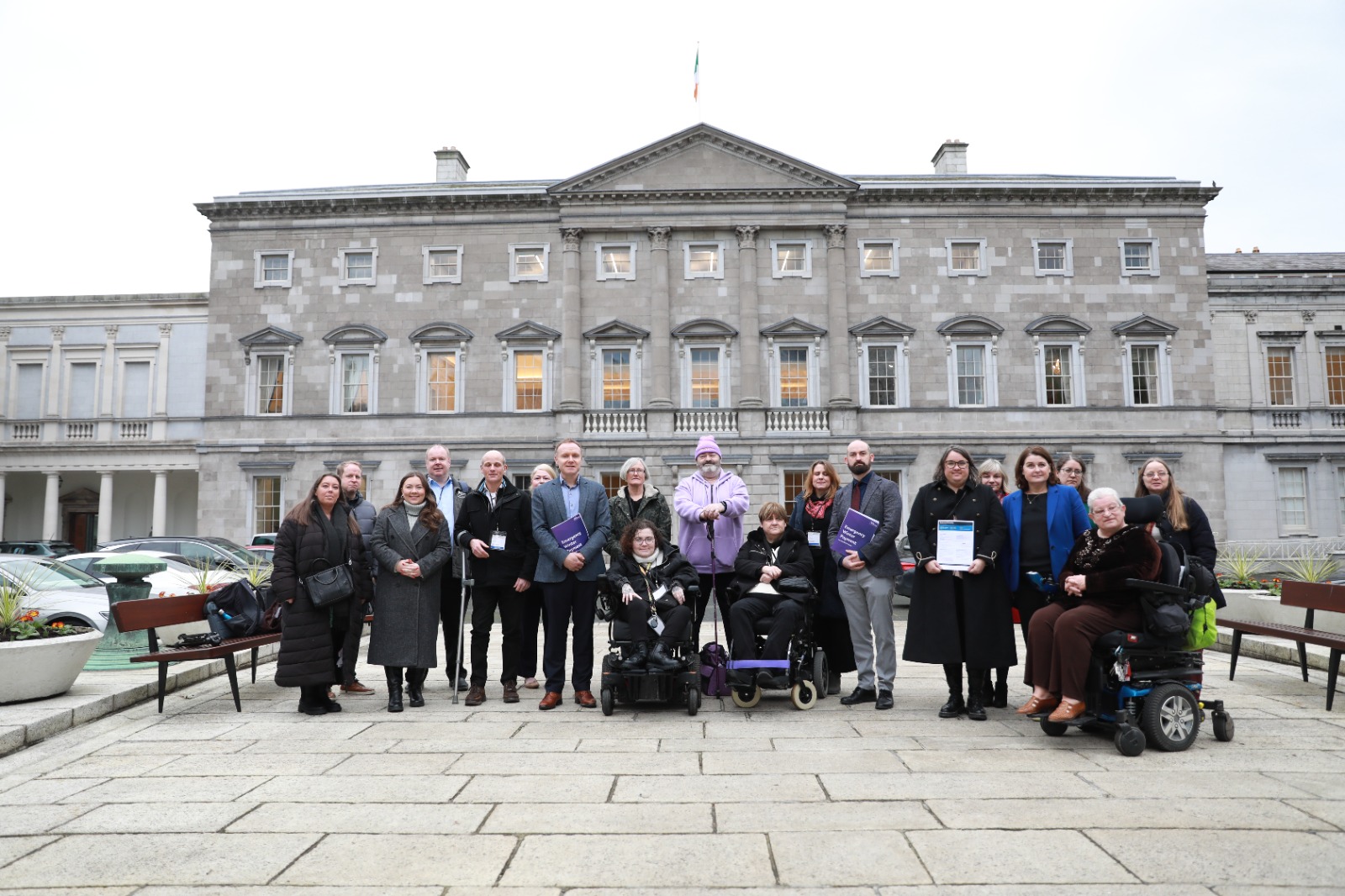
I attended Leinster House in support of people with lived experience of disability who are calling for an Emergency Winter Disability Payment. Representatives from organisations including the Disability Federation of Ireland, Early Onset Parkinson’s, Access for All, and the Irish Wheelchair Association set out a clear and consistent message: disabled people are being hit hardest by the cost-of-living crisis and cannot afford further delay.
More than one in five people in Ireland live with a disability or long-term condition, and most people will experience disability at some point in their lives. Despite this, disabled people face significantly higher risks of poverty, social exclusion, and unemployment. They show up in energy bills, transport costs, and everyday financial stress.
The impact of rising costs has been particularly severe. Two in five disabled people cannot afford basic necessities such as adequate heating or clothing, compared with fewer than one in five in the general population. One in five lives in consistent poverty, and fewer than one third of disabled people are in employment—one of the widest disability employment gaps in the OECD.
Disability also brings unavoidable additional costs, including higher energy use, transport, assistive technology, healthcare, and personal supports. Estimates put the extra annual cost of disability at between €10,490 and €14,830, a figure that is likely higher again following recent inflation. Winter is especially difficult, as heating costs rise and financial pressures intensify.
The case for a cost-of-disability payment is long established. It was first identified in 2004 and reaffirmed by the Indecon report commissioned by the State in 2021. Although the Programme for Government committed to introducing a permanent Annual Cost of Disability Support Payment, this was not delivered in Budget 2026. The Disability Federation of Ireland estimates that disabled people will be €1,400 worse off in 2026 compared to 2025.
While the Minister for Social Protection has suggested a permanent payment may be introduced in Budget 2027, this leaves another year in which disabled people are expected to absorb rising costs without adequate support.
An Emergency Winter Disability Payment of €400 would provide immediate, targeted relief. It would support approximately 310,000 people at an estimated cost of €124 million and could be delivered through the supplementary estimates process. Eligibility would include recipients of Disability Allowance, Invalidity Pension, Blind Pension, Incapacity Supplement, Disablement Pension, and Domiciliary Care Allowance.
What stood out at Leinster House was the clarity and credibility of those with lived experience. The ask is straightforward: recognition of the real, measurable costs of disability and action in line with existing commitments.
A once-off winter payment is not a replacement for a permanent solution, but it is a necessary and achievable step. The case has been made repeatedly. What is needed now is a decision to act.
Thank you for subscribing!
Have a great day!